
THE COMPLETE STRATEGIC PLAN TO DEFEAT IRAN
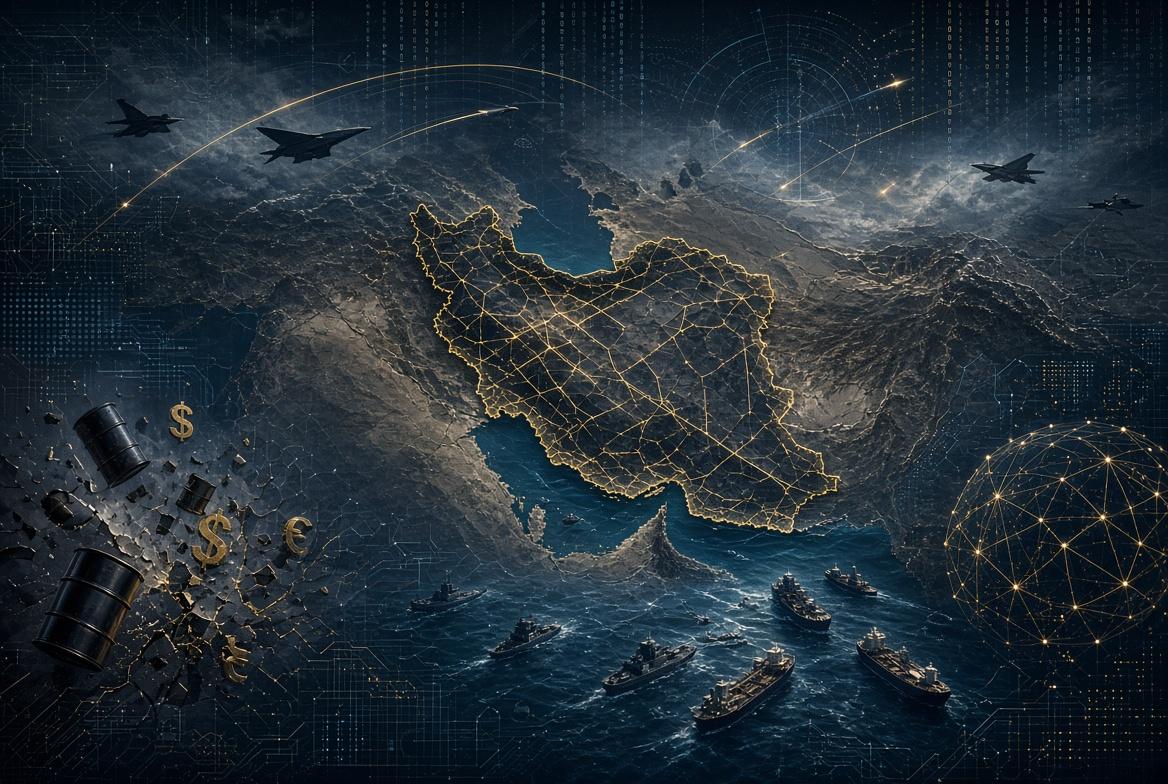
A Comprehensive, Multi-Domain Blueprint for Victory
Executive Summary
The United States is six months into an unprecedented conflict with Iran that has evolved into a complex hybrid war spanning military, economic, cyber, and domestic security domains. The conflict, which began with Operation Epic Fury on February 28, 2026—a coordinated U.S.-Israeli strike that eliminated Supreme Leader Ali Khamenei and other senior leaders—has exposed both the power and the limitations of conventional military force.
The regime's resilience, its asymmetric warfare capabilities, and the growing threat to the U.S. homeland demand a comprehensive strategy that goes far beyond airstrikes. This plan integrates kinetic strikes, electronic warfare, economic strangulation, cyber operations, psychological warfare, domestic counterterrorism, and a clear diplomatic endgame into a coherent campaign designed to achieve a sustainable victory.
Success in this conflict requires not only military and economic pressure but also sustained domestic political will, effective management of great-power competitors (China and Russia), and a credible post-war stabilization framework. This updated plan addresses these critical dimensions.
PART I: STRATEGIC ASSESSMENT—WHERE WE STAND
1.1 The Current Battlefield
The conflict has transformed into what strategists call a "hybrid war" encompassing military, economic, energy, media, electronic, and even agricultural and industrial arenas. Chairman of the Joint Chiefs of Staff General Dan Caine has publicly acknowledged that joint space and cyber operations successfully "disrupted, disoriented, and confused" Iranian forces before the kinetic strikes.
Key Developments:
| Domain | Status |
|---|---|
| Military | Over 6,000 targets struck; Iranian missile infrastructure severely damaged (reportedly 66%) but mobile drone units remain a persistent threat |
| Economic | U.S. naval blockade in effect; Strait of Hormuz traffic has dropped by approximately 97% |
| Cyber/EW | Iranian communications and sensor networks disrupted; nationwide internet blackout reducing connectivity to 1-4% of normal levels |
| Homeland | Multiple attacks on U.S. soil; cyberattacks on water systems in at least seven states; Iranian "sleeper cells" potentially activated |
| Diplomatic | 14-point draft memorandum negotiated but implementation remains uncertain |
1.2 Iran's Vulnerabilities
Iran's strength is also its weakness. The regime depends on several critical nodes that can be systematically targeted:
-
Oil exports through Kharg Island: Handles 85-90% of Iran's oil exports; the naval blockade is actively cutting off this revenue
-
The Strait of Hormuz: Iran's primary leverage point, but also the source of its economic vulnerability as the blockade strangles its economy
-
Command and control networks: Highly centralized; the initial strikes successfully "decapitated" senior leadership
-
Economic stability: Hyperinflation exceeding 42%, with the economy projected to shrink by 10% this year
-
Internal dissent: The regime has shown signs of fragility, imposing a near-total internet blackout to control information
1.3 Iran's Asymmetric Warfare Tools
Iran has developed a sophisticated asymmetric warfare capability to counter U.S. military superiority:
-
Proxy networks: Support for Hezbollah, Hamas, and Houthi rebels to project power regionally
-
Ballistic missile and drone programs: Despite 66% infrastructure damage, mobile units remain a threat
-
Cyber capabilities: Demonstrated ability to conduct wiper attacks, DDoS campaigns, and industrial control system exploitation
-
Electronic warfare: GPS jamming and spoofing in the Strait of Hormuz, disrupting navigation systems of ships and military assets
-
Media and psychological warfare: AI-generated content and misinformation campaigns
PART II: THE HOMELAND THREAT—A NEW FRONT
2.1 The Threat Is Real and Escalating
Iran's capabilities to strike the U.S. homeland are now demonstrable, not theoretical.
Cyber Attacks on Critical Infrastructure:
-
Water infrastructure in at least seven states, including Minnesota, Michigan, New Jersey, and Georgia, has been compromised
-
The FBI and CISA "almost certainly" attribute these attacks to Iran
The Sleeper Cell Threat:
-
The White House has publicly acknowledged a figure of over 1,700 potential "sleeper cells"
-
Between 2021 and 2024, roughly 1,504 Iranians were arrested at the U.S. border, with approximately 700 released into the country
-
Federal authorities have issued security alerts warning of a possible Iranian effort to activate "prepositioned sleeper assets"
Attacks on U.S. Soil:
-
March 1, 2026: A naturalized U.S. citizen opened fire at a bar in Austin, Texas, wearing clothing indicating support for Iran, killing three
-
March 7, 2026: Two Islamic State-inspired teens hurled IEDs at protesters outside the New York City mayor's mansion
-
March 12, 2026: A shooting at Old Dominion University killed an ROTC instructor
-
March 12, 2026: A U.S. citizen with family ties to Lebanon drove a vehicle into Temple Israel in West Bloomfield, Michigan
Expert Warning: "Iran's past calculus was low-grade operations in the United States, enough to keep the FBI busy but not large enough to trigger serious military consequences. With the latter now already a reality, the Islamic Republic has less to lose by orchestrating bolder attacks."
2.2 The DHS Shutdown Problem
The partial government shutdown of the Department of Homeland Security has created critical vulnerabilities:
-
Reduced staffing in critical agencies may delay intelligence sharing with local police
-
FEMA and other critical divisions are "basically shut down"
-
The National Counterterrorism Center director resigned in March 2026, citing opposition to the war
-
A new presidential counterterrorism strategy, promised in July 2025, has yet to be released
Implication: "If something were to occur here in the United States, there could be some significant delays" in the federal response.
PART II-A: HOMELAND SECURITY RESTORATION PLAN
2.3 Immediate Restoration Measures
The DHS shutdown represents a critical vulnerability that must be addressed within the first 30 days of this plan's implementation.
Legislative Action (Days 1-15):
-
Congress must pass an emergency supplemental appropriations bill specifically funding DHS counterterrorism operations
-
Request: $3.2 billion for immediate restoration of FEMA, NCTC, and intelligence-sharing divisions
-
Bipartisan support should be sought through framing this as a non-partisan national security imperative
Interim Measures During Shutdown (Days 1-30):
-
Activate National Guard civil support teams to backfill DHS functions in high-risk urban areas
-
Surge FBI Joint Terrorism Task Forces (JTTFs) with additional analysts and agents
-
Establish a temporary "Homeland Security Coordination Cell" at the White House to ensure continuity
-
Prioritize intelligence-sharing memoranda with state and local law enforcement
Restoration Timeline:
| Milestone | Timeline | Responsible Actor |
|---|---|---|
| Emergency funding passed | Days 1-15 | Congress |
| FEMA fully operational | Days 15-30 | DHS Acting Secretary |
| NCTC leadership confirmed | Days 15-45 | Senate |
| New CT strategy released | Day 30 | White House |
| NTAS system resumed | Day 30 | DHS |
2.4 New Counterterrorism Strategy Framework
The strategy promised in July 2025 must be finalized and released. Key elements should include:
-
Enhanced Information Sharing: Mandatory, real-time intelligence sharing with state and local law enforcement
-
Community Engagement: Re-establish the DHS Center for Prevention Programs and Partnerships to work with Muslim and Arab American communities
-
Sleeper Cell Prioritization: Dedicated task force to identify, monitor, and disrupt potential sleeper cells
-
Critical Infrastructure Protection: Mandatory cybersecurity standards for water, energy, and healthcare sectors
-
Public Communications: Regular National Terrorism Advisory System (NTAS) updates with actionable guidance
PART III: THE COMPREHENSIVE PLAN—PHASE BY PHASE
Phase 1: Military Paralysis (30 Days)
3.1 Complete the "Decapitation" Strategy
The initial strikes successfully eliminated Supreme Leader Ali Khamenei and other senior leadership. This must be sustained:
Priority Targets:
-
Remaining command-and-control facilities and IRGC headquarters
-
Military communication networks and intelligence nodes
-
Integrated air defense systems (IADS)
-
Ballistic missile launch infrastructure
-
Drone production and deployment sites
Operational Details:
-
Continue strikes on the Cobra-V8 electronic warfare systems (Iran's version of Russia's Krasukha-4) to blind air defenses
-
Use B-2 Spirit bombers, F-35s, and MQ-9 drones for precision strikes
3.2 Electronic Warfare Dominance
The U.S. has demonstrated a generational advantage in electronic warfare that must be pressed relentlessly:
-
EA-37B Compass Call: Jams communications, radar, and data links between command centers and missile batteries
-
EA-18G Growler: Uses DRFM deception to trick Iranian radar into seeing false targets
-
GPS and AIS Disruption: Electronic warfare operations have disrupted more than 1,100 ships in the Gulf region
Plan Element:
-
Deploy additional electronic warfare squadrons to create continuous "electronic corridors" for strike packages
-
Target remaining Cobra-V8 systems; their loss would leave Iran's air defense system effectively blind
3.3 The Maritime Blockade
The U.S. has operationalized a full maritime blockade targeting Iranian trade, with warships intercepting vessels and forcing several to turn back. This transforms the conflict from direct military confrontation into a war of economic strangulation.
Key Elements:
-
Blockade all vessels entering or leaving Iranian ports
-
Force Iranian ships to turn back; effectively cut off Iran's access to global markets
-
Maintain at least 20 warships in the Middle East
Strategic Rationale: This blockade "targets the Iranian regime's economic survival, depriving it of hundreds of millions of dollars in daily revenue, while minimizing opportunities to impose reciprocal costs on its neighbors."
Phase 2: Economic Strangulation (30-60 Days)
4.1 The "Economic Fury" Campaign
The naval blockade reverses the equation of the conflict, making Iran the primary target of economic pressure rather than the instigator of asymmetric attacks.
Core Components:
-
Maintain the Kharg Island blockade: This terminal handles 85-90% of Iran's oil exports; cutting it off permanently is essential
-
Target the "shadow fleet": Iranian tankers operating under false flags must be intercepted through persistent surveillance and naval interdiction
-
Sanction the facilitators: Target UAE financial networks that convert Iranian yuan into usable currency
-
Consider Chinese sanctions: China purchases over 90% of Iranian oil; this is the nuclear option of economic warfare
Oil Market Impact:
-
Oil prices have surged past $100 per barrel
-
Strait traffic has dropped by roughly 97% from pre-war levels
-
Global fuel and fertilizer prices are soaring
4.2 The Balance of Economic Pain
Iran is suffering crippling economic damage:
| Metric | Impact |
|---|---|
| Economic Contraction | Projected to shrink by 10% this year |
| Infrastructure Damage | Steel mills and power grids severely damaged |
| Unemployment | Widespread layoffs |
| Digital Economy | Internet blackout crippling small businesses |
| Inflation | Exceeded 42% |
Iran's Gambit: Tehran is betting that the global energy shock and domestic political pressure will eventually force President Trump to back down first.
Counter-Strategy: The U.S. must demonstrate that it can endure the economic pain longer than Iran can.
Phase 2-A: Managing Economic Pain and Public Will
4.3 Mitigating Domestic Economic Impact
A sustained blockade will impose significant costs on the U.S. and global economy. These must be actively managed to maintain domestic political support.
Strategic Petroleum Reserve (SPR) Management:
-
Release up to 1 million barrels per day from the SPR to moderate price spikes
-
Coordinate with International Energy Agency (IEA) member states for coordinated releases
-
Target releases to minimize disruption to U.S. gasoline and heating oil markets
Allied Burden-Sharing:
-
Request that European allies release their strategic reserves
-
Negotiate with Gulf states to increase production capacity (Saudi Arabia, UAE)
-
Explore term contracts with non-Iranian suppliers (Venezuela, Libya, Nigeria)
Domestic Political Communications:
-
Establish a "War Economy Communications Cell" at the White House
-
Provide weekly public briefings on economic impacts and mitigation measures
-
Frame economic sacrifice as a shared national commitment to defeat the regime
-
Engage bipartisan Congressional leaders to demonstrate transparency and shared responsibility
Economic Resilience Measures:
-
Consider temporary suspension of federal gasoline taxes
-
Accelerate permitting for domestic energy production
-
Provide targeted assistance to industries most affected (shipping, agriculture, manufacturing)
-
Establish a "Strategic Economic Resilience Fund" to backstop affected communities
4.4 Pressure on China
China's purchase of over 90% of Iranian oil is the single greatest enabler of the regime's economic survival. Addressing this is essential.
Policy Options (Escalating):
| Level | Action | Risk Level |
|---|---|---|
| Level 1 | Diplomatic demarches: Request China voluntarily reduce purchases | Low |
| Level 2 | Secondary sanctions on Chinese banks handling Iranian transactions | Medium |
| Level 3 | Sanctions on Chinese oil refiners and shipping companies | High |
| Level 4 | Blockade enforcement against Chinese-flagged tankers | Very High |
Mitigation Strategy:
-
Engage China through bilateral and multilateral channels (UN Security Council, G20)
-
Offer incentives: access to U.S. markets, technology transfers, or support on other issues (Taiwan, trade)
-
Coordinate with European allies to present a united front
-
Prepare for potential trade retaliation by diversifying supply chains
-
Develop legal frameworks for sanctions enforcement to withstand WTO challenges
Fallback Option: If China refuses to cooperate, the U.S. must be prepared to enforce the blockade against Chinese-flagged vessels, recognizing this could escalate to a great-power confrontation.
Phase 3: Cyber and Information Warfare (Ongoing)
5.1 Cyber Operations as a Force Multiplier
The 2026 war has demonstrated that cyber power is now a "force multiplier rather than a support tool."
U.S. Cyber Capabilities in Action:
-
Joint space and cyber operations "effectively disrupted Iranian communications and sensor networks"
-
The BadeSaba prayer app, with over 5 million downloads, was compromised to display anti-regime messages
-
Iranian government and media websites, including state-run IRNA, were defaced with anti-regime messages
-
Cyber intrusions targeted military and government systems to weaken coordinated responses
Psychological Operations Integration:
-
Hackers hijacked television channels and aired speeches from Trump and Netanyahu through AI, urging Iranians to oppose the regime
-
Users of the compromised prayer app received messages warning the regime would "pay for their cruel and merciless actions against the innocent people of Iran"
5.2 Iran's Cyber Response
Iran has demonstrated sophisticated cyber capabilities and has likely executed significant retaliatory attacks:
-
The "Great Epic" Cyber Campaign: The most aggressive use of Iran's state-directed cyber campaign
-
The Handala Hack: Compromised Israeli energy firms, Jordanian fuel systems, and healthcare targets
-
Industrial Control System Exploitation: Iran has demonstrated capability to target U.S. critical infrastructure
-
AI and Commercial Satellites: Iranian commanders reportedly used AI and Chinese commercial satellites to monitor U.S. airbases and shoot down drones and aircraft
Plan Element:
-
Enhance defensive cyber posture for critical U.S. infrastructure
-
Continue offensive cyber operations to disrupt Iranian command and control
-
Maintain capability to counter AI-enabled attacks
5.3 The Cognitive Battlefield
The war has expanded into the cognitive domain, with both sides using information warfare to shape narratives:
-
AI-Generated Content: A sharp increase in misleading content, particularly AI-generated materials circulating on social media
-
Digital Diplomacy: Trump's messaging on Truth Social (more than three posts per day) aims to influence financial and oil markets
-
Narrative Warfare: Both sides using misinformation and psychological operations to influence public opinion
Plan Element:
-
Develop rapid response capability to counter AI-generated misinformation
-
Maintain broadcast into Iran using over-the-air TV and radio
-
Support independent Iranian voices and anti-regime narratives
Phase 3-A: Attribution Challenges and Legal Frameworks
5.4 Cyber Attribution: Challenges and Protocols
Accurate attribution of cyber operations is notoriously difficult but essential for both operational effectiveness and international legitimacy.
Attribution Challenges:
-
Iranian cyber operations often use proxies, false flags, and compromised infrastructure
-
Attribution can take weeks or months, delaying response options
-
Disputed attribution can undermine coalition cohesion and public support
Attribution Protocol:
-
Technical Analysis: Forensic examination of malware, command-and-control infrastructure, and digital signatures
-
Intelligence Confirmation: SIGINT, HUMINT, and geolocation data to confirm origin
-
Interagency Consensus: Coordination between NSA, CIA, FBI, and Cyber Command
-
Public Communication: Declassified summary with supporting technical evidence
-
International Consultation: Share evidence with allies before public release
Legal Framework:
-
All offensive cyber operations must comply with the Law of Armed Conflict (LOAC)
-
Establish clear "red lines" for cyber operations: no targeting of civilian infrastructure (hospitals, water treatment except as legitimate military objectives)
-
Develop rules of engagement for cyber responses, including proportional response thresholds
-
Maintain legal review process for all cyber operations, with senior-level approval
Fallback Options:
-
If attribution is inconclusive, consider symmetrical response options (e.g., matching the type of attack)
-
Maintain capability for "silent" responses that do not require public attribution
-
Develop a "gray zone" response toolkit for operations below the threshold of armed conflict
Phase 4: Domestic Counterterrorism (Immediate and Ongoing)
6.1 The Homeland Threat Landscape
The conflict has already inspired domestic attacks in the United States:
Attack Patterns:
-
Lone wolf actors inspired by the conflict, not necessarily directed by Iran
-
Diverse perpetrators: U.S. National Guard veteran, teenagers, mentally ill individuals, U.S. citizens with family ties to Lebanon
-
Diverse targets: bars, government buildings, universities, synagogues
Iranian State-Sponsored Threat:
-
Iran has long engaged in assassination plots in the United States, often by enlisting third-party criminal groups
-
"With the latter now already a reality, the Islamic Republic has less to lose by orchestrating bolder attacks"
Plan Element:
-
Restore DHS Counterterrorism Capabilities: End the partial government shutdown and restore full functionality to FEMA and other critical divisions
-
Release a New Counterterrorism Strategy: The strategy promised in July 2025 must be finalized and released
-
Resume National Terrorism Advisory System: Provide regular threat assessments to the public and law enforcement
-
Restore Prevention Infrastructure: Re-establish the DHS Center for Prevention Programs and Partnerships
6.2 Protecting High-Profile Targets
Security experts have warned that events in the U.S. could make the country an "escalated target":
-
World Cup soccer matches
-
America's 250th anniversary celebrations
Plan Element:
-
Enhance security for high-profile events
-
Share intelligence with local law enforcement in a timely manner
-
Ensure emergency communication systems are functional
Phase 4-A: Sleeper Cell Detection and Disruption
6.3 Enhanced Sleeper Cell Strategy
The White House has acknowledged over 1,700 potential "sleeper cells." A dedicated strategy is required.
Detection Capabilities:
-
Expand FBI counterterrorism field offices in high-risk areas
-
Deploy predictive analytics using open-source intelligence and financial transaction monitoring
-
Enhance community outreach programs to encourage reporting of suspicious activity
-
Coordinate with state and local law enforcement on threat indicators
Disruption Protocols:
-
Priority 1: Cells with demonstrated intent and capability (immediate disruption)
-
Priority 2: Cells with intent but limited capability (monitoring and disruption planning)
-
Priority 3: Cells with capability but no demonstrated intent (continued surveillance)
Legal Authorities:
-
Ensure FISA warrants are obtained for electronic surveillance
-
Maintain prosecutorial capacity for material support charges
-
Prepare for potential detention of non-citizen suspects (immigration detention authorities)
Public Communications:
-
Balance transparency with operational security
-
Provide actionable guidance to the public without causing panic
-
Emphasize community resilience and "see something, say something" campaigns
Phase 5: International Coalition and Diplomatic Endgame
7.1 The Arab States' Position
Arab states have adopted a paradoxical but strategic position:
Their Logic:
-
They support the U.S.-Israel war against the Iranian regime but differ on strategy and endgame
-
They want to make sure post-war Iran will not be as powerful as it is right now
-
The naval blockade "plays very well into the hands of Arabs" because it transforms the conflict into economic strangulation
Strategic Objectives:
-
Contain the war geographically: Prevent Iran from expanding the battlefield
-
Preserve economic continuity: Avoid systemic collapse despite disrupted shipping
-
Outsource escalation while retaining influence: Allow the U.S. to lead coercive action while still shaping outcomes
Plan Element:
-
Continue working with Gulf allies on logistics, intelligence, and political cooperation
-
Maintain defensive systems (THAAD and Patriot) to protect regional partners
-
Leverage Arab support for the blockade while maintaining public distance
7.2 The 14-Point Draft Memorandum
A 14-point draft memorandum between the U.S. and Iran was released in June 2026, with both sides set to officially sign.
Key Provisions:
| Article | Content |
|---|---|
| Article 1 | Immediate and permanent end to the war on all fronts, including Lebanon |
| Article 2 | Respect each other's sovereignty and territorial integrity |
| Article 4 | U.S. will lift the naval blockade and restore traffic within 30 days |
| Article 5 | Iran will resume merchant ship movement within 30 days |
| Article 6 | U.S. will create a comprehensive plan with at least $300 billion for Iran's reconstruction and economic development |
| Article 7 | U.S. will end all types of sanctions against Iran |
| Article 8 | Iran reaffirms it will never produce nuclear weapons |
Analysis:
-
The $300 billion reconstruction fund is a "huge sum of money" that far exceeds the value of Iran's frozen assets
-
The pledge to end all sanctions goes "much further than the JCPOA"
-
Left unaddressed is whether Iran will ultimately retain control over the Strait of Hormuz
-
Iran may be able to charge fees for Strait traffic in the future as a "permanent new revenue stream"
Risk Assessment:
-
Trump has threatened to strike Iran again if it fails to comply with the MOU: "If they don't behave, we'll go right back to dropping bombs right smack in the middle of their head"
-
Iran has stated it cannot move forward until the U.S. fulfills its part regarding Israel's withdrawal from Lebanon
-
If the MOU fails, "the world will be left with vastly reduced oil and gas supplies and a regional war"
Phase 5-A: Enforceable Diplomatic Framework
7.3 Strengthening the Diplomatic Off-Ramp
The 14-point MOU is optimistic and lacks enforcement mechanisms. A stronger framework is required.
Verification and Enforcement Mechanisms:
| Element | Mechanism | Responsibility |
|---|---|---|
| Nuclear freeze | IAEA inspections + national technical means (satellites, SIGINT) | IAEA + U.S. intelligence |
| Missile/drone reduction | On-site inspections + satellite monitoring | UN panel + U.S. intelligence |
| Sanctions relief | Phased, tied to compliance milestones | U.S. Treasury + UNSC |
| Reconstruction funds | Escrow account + milestone-based release | World Bank + donor coalition |
| Hormuz access | Internationalized transit regime (IMO framework) | IMO + Gulf states |
Phased Sanctions Relief:
| Phase | Condition | Relief |
|---|---|---|
| Phase 1 | Ceasefire + IAEA access | Suspension of oil sanctions (30-day trial) |
| Phase 2 | Nuclear freeze verified | Full suspension of nuclear-related sanctions |
| Phase 3 | Missile/drone reductions | Suspension of all secondary sanctions |
| Phase 4 | Full compliance + Hormuz agreement | Permanent sanctions termination |
Strait of Hormuz Resolution:
-
Establish an internationalized transit regime under the International Maritime Organization (IMO)
-
Iran receives transit fees (standardized) in exchange for guaranteed safe passage
-
Multinational naval patrols to enforce freedom of navigation
-
Dispute resolution mechanism through the UN Security Council
If the MOU Fails:
-
Maintain blockade and economic pressure
-
Escalate military strikes (targeted, not full-scale invasion)
-
Support internal opposition movements
-
Prepare for prolonged containment strategy
Phase 5-B: Post-War Stabilization and Reconstruction
7.4 Post-Conflict Stabilization Framework
The plan currently focuses on defeating Iran but offers little detail on what comes next. A credible stabilization strategy is essential.
Governance Transition Options:
| Option | Description | Pros | Cons |
|---|---|---|---|
| International Trusteeship | UN-administered transition (5+ years) | Legitimacy, resources | Sovereignty concerns, cost |
| Coalition Administration | U.S.-led interim authority | Control, speed | Perception of occupation |
| New Iranian Government | Support for democratic transition | Legitimacy, local ownership | Unpredictable, risk of chaos |
| Federal/Decentralized Model | Power-sharing among ethnic groups | Stability, inclusion | Complexity, potential fragmentation |
Recommended Approach: A phased transition:
-
Immediate (0-6 months): Humanitarian relief, security stabilization, interim governance (UN-led)
-
Transitional (6-24 months): Constitutional assembly, elections, economic reconstruction
-
Long-term (2-10 years): Full sovereignty, regional integration, security guarantees
Humanitarian and Economic Reconstruction:
-
Estimated cost: $300-500 billion over 10 years
-
Burden-sharing: U.S. (30%), Gulf states (30%), EU (20%), Japan/South Korea (10%), international institutions (10%)
-
Priorities: Infrastructure (energy, water, transportation), healthcare, education, economic diversification
-
Anti-corruption mechanisms: International oversight, transparent procurement, civil society monitoring
Regional Security Architecture:
-
Post-war Iran as a non-nuclear, non-threatening state
-
Expanded Gulf Cooperation Council (GCC) security framework including Iran (eventually)
-
Multilateral naval patrols for Strait of Hormuz
-
U.S. security guarantees for Gulf states (reaffirmed)
-
Confidence-building measures: prisoner exchanges, diplomatic normalization, cultural exchanges
Risk Management:
-
Refugee flows: Prepare for up to 5 million refugees; coordinate with UNHCR and neighboring states
-
Fragmentation: Plan for potential civil war or ethnic conflict; maintain rapid reaction force
-
Radicalization: Monitor and counter rise of hardline factions (IRGC remnants, extremist groups)
-
Regional spillover: Prevent conflict from expanding to Iraq, Syria, Lebanon, Yemen
[UPDATE] PART V-A: THE CHINA AND RUSSIA FACTOR
8.1 Great Power Competition Dimension
Any comprehensive plan to defeat Iran must account for the interests and actions of China and Russia, who have significant stakes in the conflict.
China's Interests and Leverage:
| Interest | Implication |
|---|---|
| Oil imports (90% of Iranian exports) | China has massive leverage over Iran's economy |
| Belt and Road Initiative (BRI) investments | China has economic interests in Iranian infrastructure |
| Geopolitical rivalry with U.S. | China may seek to constrain U.S. military options |
| UN Security Council veto | China can block or delay international action |
Russia's Interests and Leverage:
| Interest | Implication |
|---|---|
| Military technology (S-300, EW systems) | Russia can enhance Iran's defensive capabilities |
| Geopolitical partnership | Russia provides diplomatic cover and coordination |
| Nuclear cooperation (Bushehr reactor) | Russia has influence over Iran's nuclear program |
| Access to Iranian airspace | Russia can use Iranian bases for regional operations |
8.2 Managing the China Factor
Strategy for Pressure:
-
Diplomatic Engagement: Bilateral and multilateral discussions (UNSC, G20) to urge China to reduce oil purchases
-
Economic Incentives: Offer China access to U.S. markets, technology transfers, or cooperation on other issues (climate, trade)
-
Secondary Sanctions: Sanction Chinese banks, refiners, and shipping companies involved in Iranian oil trade
-
Legal Enforcement: Use U.S. legal authorities (CAATSA, CISADA) to penalize entities facilitating Iranian oil sales
-
Blockade Enforcement: Intercept Chinese-flagged tankers if necessary (recognizing escalation risk)
De-escalation and Cooperation Opportunities:
-
Offer China a role in post-war reconstruction (infrastructure contracts)
-
Coordinate on nuclear non-proliferation (Iran's nuclear program)
-
Joint maritime security in the Gulf (freedom of navigation)
-
Economic cooperation (energy markets stabilization)
Fallback Options:
-
If China resists, prepare for economic decoupling on Iran-related issues
-
Develop alternative oil supplies to reduce dependence on Strait of Hormuz
-
Strengthen alliances with India, Japan, South Korea to counterbalance China
8.3 Managing the Russia Factor
Strategy for Countering Russian Support:
-
EW Countermeasures: Develop and deploy EW systems to neutralize Russian-supplied equipment (e.g., Krasukha-4)
-
Intelligence Sharing: Share intelligence with allies on Russian military assistance to Iran
-
Diplomatic Pressure: Use UNSC and bilateral channels to press Russia to cease military support
-
Sanctions: Apply sanctions on Russian entities providing military technology to Iran
-
Military Action: If necessary, target Russian-supplied systems in Iran (risk of direct confrontation)
De-escalation and Cooperation Opportunities:
-
Coordinate on Syrian and Middle East stability
-
Discussions on post-war Iran's nuclear program
-
Confidence-building measures: arms control, transparency, hotlines
Risk of Great-Power Confrontation:
-
Direct U.S.-Russia or U.S.-China military confrontation is the highest-risk scenario
-
De-escalation mechanisms: Establish direct communication channels (hotlines) with Moscow and Beijing
-
Red lines: Clearly communicate consequences for direct military involvement
-
Crisis management: Regular strategic dialogues with Russia and China
PART VI: IMPLEMENTATION—WHAT IT TAKES TO WIN
8.1 Military Requirements
-
Sustained air campaign: Continue strikes until Iran's missile and drone capabilities are reduced by 80%+
-
Stockpile replenishment: Patriot interceptor stockpiles must be replenished immediately
-
Naval presence: Maintain more than 20 warships in the Middle East
-
Bomber support: Keep B-2, B-1B, and B-52 bombers in theater
8.2 Economic Requirements
-
Enforce the blockade: Maintain the naval blockade indefinitely
-
Target the shadow fleet: Intercept Iranian tankers operating under false flags
-
Expand sanctions: Secondary sanctions on any entity doing business with Iran
-
Manage oil prices: Release from Strategic Petroleum Reserve as needed
8.3 Domestic Requirements
-
Restore DHS functionality: End the partial government shutdown
-
Release counterterrorism strategy: Complete and release the strategy promised in July 2025
-
Resume threat advisories: Provide regular National Terrorism Advisory System updates
-
Restore prevention infrastructure: Re-establish DHS Center for Prevention Programs and Partnerships
8.4 Political Requirements
-
Domestic support: The administration must make a clear case for the war
-
International legitimacy: Maintain support from regional partners
-
Long-term commitment: Prepare the American public for sustained engagement
[UPDATE] PART VI-A: PUBLIC AFFAIRS AND STRATEGIC COMMUNICATIONS
8.5 Sustaining Public Support
Public will is the decisive variable in a prolonged conflict. A dedicated communications strategy is essential.
Narrative Framework:
-
Why We Fight: Defend the homeland, protect allies, prevent nuclear proliferation, uphold international law
-
The Stakes: A nuclear-armed Iran is an existential threat to the U.S. and its allies
-
The Costs: Economic pain and sacrifices are necessary and will be mitigated
-
The Path to Victory: Clear, measurable progress toward defined objectives
-
The Endgame: A stable, non-nuclear Iran with a functioning economy and regional integration
Communications Channels:
-
Weekly White House press briefings
-
Regular Congressional briefings (both parties)
-
Social media engagement (Truth Social, X, Facebook, Instagram)
-
Traditional media (network news, print, radio)
-
Direct messaging to key constituencies (military families, business leaders, diaspora communities)
Transparency Measures:
-
Declassify and release intelligence summaries (with redactions)
-
Provide regular progress reports (metrics, milestones)
-
Acknowledge setbacks and challenges (credibility)
-
Engage independent experts and think tanks for validation
Bipartisan Engagement:
-
Brief Congressional leadership (both parties) weekly
-
Establish a bipartisan advisory council
-
Seek input from former national security officials
-
Encourage bipartisan support for emergency funding and authorizations
Countering Disinformation:
-
Establish a "Disinformation Response Cell" at the White House
-
Rapidly fact-check and rebut false claims
-
Coordinate with social media platforms to remove harmful content
-
Engage independent fact-checkers and media organizations
[UPDATE] PART VI-B: RISK MATRIX AND CONTINGENCY PLANNING
8.6 Comprehensive Risk Matrix
| Risk | Probability | Impact | Mitigation |
|---|---|---|---|
| Military Escalation | Medium | High | Clear red lines, de-escalation mechanisms, communication hotlines |
| Domestic Terror Attack | High | High | Restore DHS, enhanced intelligence-sharing, community engagement |
| Economic Shock (Oil Prices) | High | Medium | SPR releases, allied coordination, domestic resilience measures |
| Coalition Collapse | Medium | High | Diplomatic engagement, burden-sharing, clear strategic vision |
| China Confrontation | Medium | Very High | Diplomatic engagement, incentives, sanctions alternatives |
| Russia Confrontation | Medium | Very High | EW countermeasures, diplomatic channels, red lines |
| Regime Collapse Chaos | Medium | High | Stabilization plan, humanitarian aid, regional coordination |
| Iranian Cyber Retaliation | High | Medium | Defensive cyber posture, rapid response, attribution protocol |
| Public Support Erosion | High | High | Strategic communications, transparency, bipartisan engagement |
| Sleeper Cell Activation | Medium | High | Enhanced detection and disruption, community engagement |
8.7 Contingency Scenarios
Scenario A: MOU Succeeds
-
Implementation: Phased sanctions relief, reconstruction, nuclear freeze
-
Post-war: Stabilization, economic development, regional integration
-
Timeline: 12-24 months
Scenario B: MOU Fails, Limited Escalation
-
Military: "Fireworks" strikes (symbolic, limited)
-
Economic: Maintain blockade, sanctions
-
Diplomatic: Re-engage negotiations with revised terms
-
Timeline: 3-6 months
Scenario C: MOU Fails, Regime Collapse
-
Military: Support opposition, targeted strikes on regime forces
-
Humanitarian: Massive aid package
-
Stabilization: International trusteeship, elections
-
Timeline: 6-18 months
Scenario D: Great-Power Confrontation
-
If China or Russia directly intervenes:
-
De-escalation first (diplomacy, hotlines)
-
If that fails: Limited, proportional response
-
Crisis management mechanisms activated
-
Prepare for broader conflict (severe contingency)
-
PART VII: WHAT SUCCESS LOOKS LIKE
| Metric | Success Criteria | Timeline | Responsible |
|---|---|---|---|
| Military | Iran's missile and drone stockpiles reduced by 80%+; no further threats to shipping | 30-60 days | CENTCOM |
| Economic | Iran's oil exports at near-zero; hyperinflation reaches 100%+; regime unable to pay forces | 60-90 days | Treasury + CENTCOM |
| Homeland | DHS fully operational; counterterrorism strategy implemented; no further domestic attacks | 30 days | DHS + FBI |
| Diplomatic | Iran returns to negotiations; Strait reopened; nuclear program frozen | 90-180 days | State Department |
| Regime Stability | Internal dissent reaches tipping point; regime collapses or agrees to fundamental restructuring | 180+ days | Entire interagency |
| China Pressure | China reduces oil purchases by 50%+; secondary sanctions enforced | 60-120 days | Treasury + State |
| Public Support | 60%+ approval for war strategy; sustained Congressional support | Ongoing | White House + Public Affairs |
| Post-War Stabilization | Stabilization framework implemented; humanitarian aid delivered; elections held | 12-24 months | State + USAID + Allies |
CONCLUSION: THE PATH TO VICTORY
The 2026 U.S.-Iran war provides a "clear and compelling case study about how cyber operations have become a central element of modern hybrid warfare." The conflict has demonstrated that victory requires a comprehensive, multi-domain approach that integrates:
-
Military Paralysis: Complete the destruction of Iran's command and control, electronic warfare capabilities, and remaining missile stockpiles
-
Economic Strangulation: Maintain the naval blockade, cut off oil exports, and trigger hyperinflation to bankrupt the regime
-
Cyber and Information Warfare: Continue offensive cyber operations, protect domestic infrastructure, and counter AI-enabled misinformation
-
Domestic Counterterrorism: Restore DHS functionality, release a counterterrorism strategy, and protect the homeland from sleeper cell activation
-
International Coalition: Work with Arab states to contain the war geographically while leveraging their logistical and political support
-
Diplomatic Endgame: Force Iran back to the table from a position of strength, using the 14-point memorandum as a framework with enforceable verification mechanisms
Great Power Management: Actively manage China's and Russia's involvement through diplomacy, incentives, and, if necessary, economic sanctions or military countermeasures
Public Will and Strategic Communications: Maintain domestic political support through a transparent, bipartisan communications strategy that frames the conflict as essential to national security
Post-War Stabilization: Plan for the aftermath, including governance transition, economic reconstruction, and regional security architecture, to avoid creating a vacuum that leads to chaos or radicalization
The Bottom Line
Iran can be defeated—but not through air power alone. Victory requires a sustained campaign that attacks the regime through every vector simultaneously. The regime is reorganizing for a long fight. Washington must demonstrate the resolve to see this through—or risk getting stuck in another endless Middle East war.
The decisive variable remains political will. The United States must demonstrate that it can endure the economic pain, manage great-power competition, and sustain domestic support longer than Iran can survive its internal collapse. This requires not just military and economic strategy, but a comprehensive political and communications campaign that spans the full spectrum of national power.
The final question is whether the United States has the will to execute this comprehensive strategy. This updated plan provides the framework for success—but it is execution, not planning, that will determine the outcome.
END OF UPDATED DOCUMENT
Summary of Key Updates
| Section | Update |
|---|---|
| Part II-A | New section: Homeland Security Restoration Plan with timeline and interim measures |
| Phase 2-A | New section: Managing Economic Pain and Public Will |
| Phase 2-A | New section: Pressure on China with policy options and risk assessment |
| Phase 3-A | New section: Attribution Challenges and Legal Frameworks |
| Phase 4-A | New section: Sleeper Cell Detection and Disruption |
| Phase 5-A | New section: Enforceable Diplomatic Framework (verification, phased relief, Hormuz resolution) |
| Phase 5-B | New section: Post-War Stabilization and Reconstruction (governance, humanitarian aid, regional security) |
| Part V-A | New section: The China and Russia Factor (great-power competition management) |
| Part VI-A | New section: Public Affairs and Strategic Communications |
| Part VI-B | New section: Risk Matrix and Contingency Planning |
| Part VII | Updated success metrics with new categories for China pressure, public support, and stabilization |


 English
 Arabic
 French
 Spanish
 Portuguese
 Deutsch
 Turkish
 Italiano
 Russian
 Romaian
 Portuguese (Brazil)
 Greek
Greek